AI Tools & Reviews
Copyleaks Pricing vs Turnitin Pricing: Honest Cost Breakdown for 2025

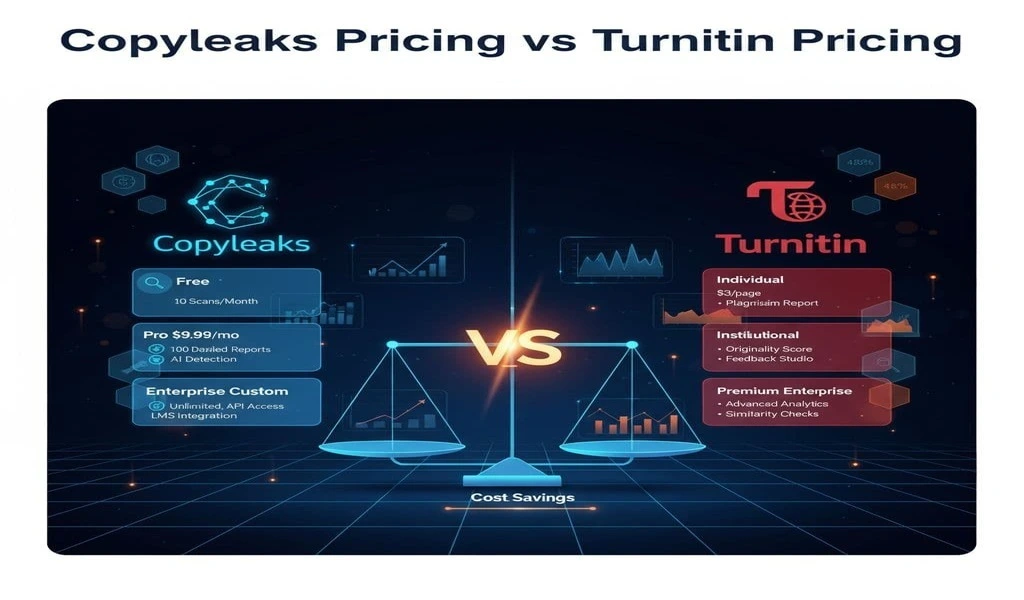
Copyleaks pricing vs Turnitin pricing is a common question for teachers, students, and schools that want reliable plagiarism checking without wasting money. Both tools check originality and even catch AI‑generated content, but the way they charge you is very different.
In this guide, I’ll walk you through how Copyleaks and Turnitin set their prices, what you really get for the money, and which one makes more sense for your budget and use case. By the end, you will know if Copyleaks or Turnitin is the better value for you, not just on paper, but in day‑to‑day use.
This guide looks at Copyleaks Pricing vs Turnitin Pricing in plain language, with a focus on real pricing models, not sales talk. It compares Copyleaks vs Turnitin pricing for students, teachers, schools, and businesses and explains Turnitin vs Copyleaks cost as a clear plagiarism checker pricing comparison. Expect simple tables, real-world examples, and direct recommendations by user type.
Quick Answer: Is Copyleaks Cheaper Than Turnitin?
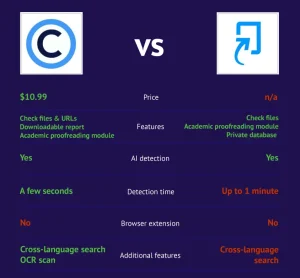
Copyleaks is usually cheaper and easier to buy for individual users, teachers, freelancers, and small teams. Turnitin is generally more expensive, with custom contracts aimed at schools and universities, and it rarely sells directly to individuals. Large institutions may get better value from Turnitin if they need advanced academic tools and already use large campus-wide licenses.
Copyleaks vs Turnitin Pricing at a Glance (Table Summary)
The table below provides a quick pricing comparison of plagiarism checkers so readers can scan the main points before reading the details on Turnitin vs Copyleaks costs.
| Aspect / User Type | Copyleaks | Turnitin |
|---|---|---|
| Main user types | Students, teachers, freelancers, businesses, APIs | Universities, colleges, K‑12 districts, large institutions |
| Pricing model | Public subscription plans and credits | Custom institutional licenses and quotes |
| Free trial or free version | Free tier with limited pages plus trials on paid | No simple free trial for individuals, pilots via schools |
| Typical cost structure | Monthly subscription plus credits that reset monthly | Annual or multi-year per-student or institutional license |
For most solo users and small teams, Copyleaks works like a normal SaaS tool with clear prices. Turnitin is closer to enterprise software, priced through contracts and quotes rather than a simple checkout page.
What Copyleaks and Turnitin Do and Why Pricing Feels Confusing
Copyleaks and Turnitin both offer plagiarism detection and, more recently, AI content detection. They scan documents against the web, databases, and other sources to flag copied or AI-written text. Both tools are widely used in education, and Copyleaks also targets businesses, agencies, and platforms.
Many people search for “Copyleaks Pricing vs Turnitin Pricing” because money often feels less clear than features. Copyleaks lists public plans, credits, and some education options. Turnitin uses institutional licenses, so there is no public price list. This creates confusion about plagiarism-detection software pricing, hidden add-ons, and the long-term cost of academic plagiarism software.
Readers who want a deeper feature view can see a detailed Copyleaks vs Turnitin feature comparison and then come back to this article for cost analysis.
Why People Compare Copyleaks vs Turnitin Pricing First, Not Features
Turnitin is the default tool in many schools, so most teachers already know the name. As budgets tighten, people are asking whether a plagiarism checker cheaper than Turnitin is “good enough” for daily work.
Subscription plans comparison matters here. Copyleaks offers clear subscription plans for students, teachers, and small teams. Turnitin focuses on institutional pricing, where administrators sign contracts that cover whole campuses. For many readers, a clear pricing model is as important as accuracy, because it lowers the risk of surprise invoices, strict usage caps, or long contracts that are hard to exit.
How Plagiarism Detection Costs Add Up Over Time
Plagiarism detection costs often look small on paper. One scan or one credit may seem cheap. The problem appears when a teacher, school, or company runs hundreds or thousands of checks every month.
With Copyleaks, the idea of a plagiarism checker cost per page is fairly easy to picture, because one credit covers about one page. With Turnitin, cost per page is buried in institutional licenses and student counts. AI plagiarism checker pricing can also be separate or bundled. That means buyers must consider both classic plagiarism detection and AI detection when comparing Turnitin vs Copyleaks costs over a full semester or year.
Copyleaks Pricing Plans (Simple Breakdown)
Copyleaks runs on public Copyleaks pricing plans built around credits. One credit covers up to about 250 words, roughly one page. Plans are sold as monthly subscriptions with a set number of credits that reset every month.
Key points based on current data (which can change, so always check the official site):
- Free tier with a small number of pages per month.
- Personal plan around $16.99 per month, or less when billed yearly, with about 100 credits.
- Pro plan around $99.99 per month, or less with annual billing, with about 1,000 credits.
- Business, Education, and Enterprise tiers with larger volumes, more features, extra seats, and custom options.
- API and Enterprise plans with volume-based pricing for platforms and large organizations.
\t
\t
\t
\t
\t
There are Copyleaks pricing plans for education, for businesses, and for API users. Larger schools and companies usually talk to sales for Copyleaks enterprise pricing. Readers who want a full product tour can see a full Copyleaks review and feature guide.
How Copyleaks Credits and Subscription Costs Work
Copyleaks uses a simple rule: one credit is about one page or 250 words. Each subscription tier gives a monthly pool of credits. For example, personal users might get around 100 credits, while Pro users get roughly 1,000.
At the end of the month, credits reset for regular subscriptions. If users run out before that, they can upgrade or buy more capacity. This credit system helps schools and teams budget for plagiarism detection costs by showing a clear link between volume, credits, and the total Copyleaks subscription cost.
Copyleaks Pricing for Students, Teachers, and Solo Users
For students, tutors, and individual teachers, Copyleaks pricing for education is usually based on lower-tier subscriptions. These plans cost roughly the same as a typical streaming service and cover a small but steady number of essays each month.
A student who checks a few assignments per week or a teacher who scans a handful of essays per class often fits into the Personal plan. There is also a free version with limited pages, plus trial options. For this group, Copyleaks vs Turnitin for students is simple: Copyleaks has a self-serve checkout, while Turnitin expects the school to pay.
Copyleaks Pricing for Businesses, Agencies, and Teams
For businesses and agencies, Copyleaks pricing for businesses centers on Pro, Business, and Enterprise plans. These tiers include more credits, more user accounts, analytics, and features like website scanning.
Content teams can estimate monthly costs using a basic rule. Count how many articles or pages they publish, map that to credits, and choose a plan that fits. Startups and platforms that want to plug checks into their own apps can request Copyleaks API pricing, which usually scales with volume and provides pay-per-use or higher credit bundles. At the top end, Copyleaks enterprise pricing is custom and negotiated for large teams or global brands.
Free Trial Options, Discounts, and Long-Term Value With Copyleaks
Copyleaks offers a free version with a limited monthly page allowance, plus free trial options for paid plans. This lets users test accuracy, reports, and AI detection before paying.
Annual billing often comes with discounts and offers, so the per-month number drops if users commit for a year. Over a whole school year or content cycle, Copyleaks can be cheaper than Turnitin once AI detection, user seats, and support are included. For many buyers, the balance of accuracy vs affordability feels favorable, because they can start small and expand only if usage grows.
Turnitin Pricing Plans (Why Exact Numbers Are Hard To Find)
Turnitin pricing plans follow a different path. The company mainly sells to schools, colleges, and universities through Turnitin institutional pricing, not to individuals.
Key points:
- No public price list on the main site.
- Institutions request quotes and get a Turnitin subscription cost based on size, region, and product mix.
- Contracts are often annual or multi-year.
- Modules like Similarity, Feedback Studio, Originality, and AI detection can change the final Turnitin license cost.
\t
\t
\t
\t
Turnitin is a classic example of academic plagiarism software cost being wrapped into enterprise licensing. Individuals rarely see a simple per-month figure. Readers who want a product view for educators can see an in-depth Turnitin review for educators.
Turnitin Pricing for Universities and Institutions
Turnitin pricing for universities typically comes in the form of an institutional license. The school signs a contract that may cover a set number of students, classes, or full-time equivalents.
The quote can include:
- Core plagiarism detection
- LMS integrations (Canvas, Moodle, etc.)
- Extra tools like grading support, authorship checks, or analytics
\t
\t
\t
Exact numbers are negotiated and not public. The result is that academic plagiarism software costs are bundled into large budgets, which work for large campuses but hide per-student or per-page plagiarism-checker costs.
Turnitin Pricing for Students and Individual Users
For students and individual teachers, Turnitin pricing for students is indirect. The school or department usually pays, then students use Turnitin inside their LMS with no visible bill.
Turnitin does not promote a simple self-serve personal plan on its main site. Some third-party services sell per-document checks that use Turnitin in the background, but they set their own prices. This makes Turnitin vs Copyleaks cost hard to predict for solo users who want transparent pricing.
How Turnitin Handles AI Detection, Add-Ons, and Hidden Costs
Turnitin now includes AI detection features in its products. For many institutions, these AI tools are sold as add-ons or part of higher tiers.
In practice, this means AI plagiarism checker pricing can raise the overall Turnitin subscription cost. Buyers need to ask about every extra module, storage limit, and integration during contract talks. Hidden costs can appear as required bundles, minimum student counts, or paid pilots.
Copyleaks vs Turnitin Pricing Comparison: Which Gives Better Value?
At a high level, Copyleaks vs Turnitin pricing reflects two different pricing models. Copyleaks is a public, subscription-based product with credits. Turnitin is a custom, institutional tool wrapped in contracts.
Here is a short value-focused view:
| User Type | Better Pricing Fit | Notes on Value |
|---|---|---|
| Individual students | Copyleaks | Self-serve, low monthly cost, free tier available |
| Individual teachers | Copyleaks | Clear Copyleaks subscription cost, no contracts |
| Universities | Turnitin or both | Turnitin strong on LMS integration and academic database |
| Businesses / agencies | Copyleaks | Public plans and API, easier budgeting |
For solo users and small teams, Copyleaks is usually cheaper and easier to get started with. For large institutions, Turnitin may justify a higher academic plagiarism software cost if they want tight LMS links and deep academic coverage.
Side-by-Side Pricing Models: Credits vs Institutional Licenses
In the Copyleaks vs Turnitin pricing debate, the main difference is credits versus institutional licenses.
- Copyleaks uses credits and subscriptions, with public prices and flexible upgrades.
- Turnitin uses institutional licenses with Turnitin institutional pricing based on student counts and contract terms.
\t
\t
This affects budget planning. Copyleaks offers flexible Turnitin alternative pricing that lets teams adjust month by month. Turnitin fits institutions that already manage long procurement cycles and want a single contract for many tools.
Free Trials, Transparency, and Hidden Costs
Copyleaks offers a free version and visible free-trial options. Prices and limits are listed to help decision-makers test and plan.
Turnitin usually does not list public trials for individuals. Schools may run pilot programs, but details sit behind sales calls. Hidden costs of plagiarism detection can appear as required feature bundles, minimum license sizes, or fees for extra modules. Teachers and admins who pick Turnitin should ask detailed questions, while those who prefer transparency often lean toward Copyleaks.
AI Detection Pricing: Copyleaks vs Turnitin
Both Copyleaks and Turnitin now offer AI detection. For Copyleaks vs Turnitin AI detection pricing, the key point is how the feature is packaged.
Copyleaks often includes AI checks inside its standard plans, counted against the same credits. Turnitin may treat AI detection as a separate add-on for institutions. This means AI checks can shift total AI plagiarism checker pricing for a campus, even if the base plagiarism tool stays the same.
Who Gets the Better Deal: Students, Teachers, or Universities?
For Copyleaks vs Turnitin for students, Copyleaks usually wins on cost and access when students pay directly. For Copyleaks vs Turnitin for teachers, Copyleaks is again better, since teachers can buy personal plans without going through procurement.
For Copyleaks vs Turnitin for universities, the answer is mixed. Copyleaks education or enterprise plans can be cheaper and more flexible at first. Turnitin can still make sense for big universities that want long-term contracts, deep academic databases, and LMS integration in one package.
People Also Ask: Common Questions About Copyleaks vs Turnitin Pricing
Which is better, Turnitin or Copyleaks?
Copyleaks is usually better for individuals and small teams, while Turnitin is often better for large institutions. Copyleaks offers public pricing, fast signup, and strong AI and plagiarism detection for daily use. Turnitin is strong on academic database depth, LMS integration, and campus-wide use. For Turnitin vs Copyleaks which is better, the right answer depends on whether the buyer is a student, teacher, or university admin.
Which is better, QuillBot or Copyleaks?
QuillBot is mainly a writing and paraphrasing tool, while Copyleaks focuses on plagiarism and AI detection. Their pricing models and goals are different. Some users draft and rephrase with QuillBot, then run originality checks with Copyleaks. For a straight plagiarism checker pricing comparison, Copyleaks is the relevant tool, not QuillBot.
Is Copyleaks as good as Turnitin Reddit?
Online discussions and Reddit threads often say that Copyleaks is easier to access and more flexible on price. Turnitin is respected for its long history in universities and strong academic database. Many non-university users report that Copyleaks is “good enough” for everyday plagiarism and AI checks, while big schools stick with Turnitin because of existing contracts and workflows. These views are general sentiment, not lab studies.
How much does Turnitin software cost?
Turnitin does not publish simple public prices for individuals, so there is no single number users can trust. Turnitin software cost usually depends on institution size, region, and selected products. Turnitin pricing plans are quoted as annual institutional licenses, so the real Turnitin subscription cost and Turnitin license cost appear only after talks with sales. Schools must contact Turnitin or a reseller for a current quote.
Real-World Scenarios: Which Tool Is Cheaper in Your Situation?
Scenario 1: A Teacher Checking a Few Assignments Each Week
A K‑12 teacher or lecturer who checks a few essays every week usually gets better value from a Copyleaks personal plan. The credit-based model matches light but regular use, and there is no need to push a district to sign a new contract. In Copyleaks vs Turnitin for teachers, Copyleaks is cheaper, clearer, and easier to get started with.
Scenario 2: A Freelance Writer or Blogger Publishing Often
A freelance writer or agency that checks several articles per week needs predictable costs. Copyleaks Pro or business plans usually beat Turnitin-based third-party services that charge per document. For this group, the best Turnitin alternative cost is often Copyleaks or a similar public-plan tool that balances accuracy vs affordability.
Scenario 3: A Small College or Training Center With Growing Classes
A small college, bootcamp, or training center may start with Copyleaks education or enterprise pricing to keep costs low at modest volumes. As class sizes grow, admins can compare Copyleaks vs Turnitin for universities at an institutional level. Turnitin pricing for universities may be higher, but some schools accept that trade-off for LMS integrations and a familiar academic brand.
Scenario 4: An Ed-Tech Platform or Enterprise Needing API Access
An ed-tech startup or large company that wants to embed plagiarism and AI checks inside its own platform must look at Copyleaks API pricing and Turnitin enterprise deals. Copyleaks often lets teams test APIs quickly with public docs and trial credits. Turnitin enterprise licensing can carry weight with institutions that expect the Turnitin name. Pay-per-use rates and volume discounts on both sides shape which tool is cheaper long term.
What Users Say About Copyleaks vs Turnitin Pricing
Public reviews and forum posts often praise Copyleaks for clear pricing, free trial options, and flexible plans for students, teachers, and small businesses. Some high-volume users note that credits can add up when scanning very large archives, so they shift to bigger bundles or custom deals.
Turnitin is often praised by institutions for a strong academic focus, deep databases, and solid LMS integrations. At the same time, admins and teachers sometimes criticize the high, opaque costs, as well as the need for sales calls to learn basic numbers. In general, Copyleaks is seen as strong on transparency and flexibility, while Turnitin carries higher perceived academic value at a higher, less visible price.
Pros and Cons of Copyleaks and Turnitin (Pricing-Focused)
Copyleaks Pricing Pros and Cons
Pros
- Clear Copyleaks pricing plans with public numbers.
- Low Copyleaks subscription cost for students, teachers, and freelancers.
- Flexible credits that match actual usage for small teams.
- Free version and free trial options.
- Good fit for Copyleaks pricing for education at the classroom or department level.
- Straightforward Copyleaks pricing for businesses and startups.
\t
\t
\t
\t
\t
\t
Cons
- Credits can become expensive at very high volumes if buyers do not switch to enterprise deals.
- Some education and enterprise tiers still require talking to sales.
- Budgeting for large archives may require careful tracking of credit use.
\t
\t
\t
Turnitin Pricing Pros and Cons
Pros
- Strong fit for large institutions and Turnitin pricing for universities.
- Deep academic integrations and LMS support.
- Well-known brand for academic integrity.
- Institutional contracts can bundle multiple tools under one Turnitin license cost.
\t
\t
\t
\t
Cons
- No public Turnitin pricing plans for individuals or simple small-team use.
- Custom-only Turnitin institutional pricing with opaque numbers.
- Higher academic plagiarism software costs than many consumer tools.
- Not friendly for freelancers, solo teachers, or small businesses that want quick setup.
\t
\t
\t
\t
FAQs About Copyleaks Pricing vs Turnitin Pricing
Is Copyleaks cheaper than Turnitin for students?
For individual students paying out of pocket, Copyleaks is usually cheaper and easier to access than Turnitin. Copyleaks offers low-cost plans and a free tier that students can sign up for directly. With Turnitin, students normally access the tool only if their school pays for an institutional license, so the cost is hidden inside tuition or fees.
Can I use Turnitin without an institution?
In most cases, no, users cannot buy a simple personal Turnitin account from the main site. Some third-party services use Turnitin in the background and charge per document, but that is not the same as having a direct subscription. People who want personal access usually look at Copyleaks or other Turnitin alternatives that offer public plans.
What is the best Turnitin alternative cost-wise?
Copyleaks is one of the best Turnitin alternatives from a cost and transparency angle, especially for teachers, freelancers, and small organizations. Its clear Copyleaks pricing plans, free trial options, and credit model make monthly spending easy to predict. The best choice still depends on how many pages users plan to check and whether they need very deep academic databases.
Does Copyleaks offer a free trial?
Yes, Copyleaks offers a free version and trial options for paid plans. Users can check a limited number of pages per month without paying, then upgrade if they like the reports and accuracy. This makes it easier for students, teachers, and businesses to test the service before committing to long-term costs.
How much does plagiarism checker cost per page on average?
The plagiarism checker cost per page varies widely by tool and usage level. With credit-based tools like Copyleaks, the math is simple, because one credit roughly equals one page, and users can divide their plan price by credits. With institutional tools like Turnitin, pricing is per student or per license, so the per-page cost is harder to see. For exact current numbers, users should check each tool’s pricing page or request a quote.
Conclusion
Copyleaks Pricing vs Turnitin Pricing comes down to public subscriptions and credits versus custom institutional licenses. Copyleaks is usually the better choice for students, solo teachers, freelancers, and small businesses that want clear prices, free trial options, and flexible credit bundles. Turnitin often suits large universities and districts that accept higher and less transparent costs in exchange for deep academic tools and tight LMS integrations.
As a simple rule, students and teachers who pay directly should start with Copyleaks. Universities and large school systems can compare Copyleaks and Turnitin through pilots and contract quotes to see which aligns with their long-term budgets. Readers who want to keep learning about tools and software costs can explore more easy tech guides on TechBasics101 and use that knowledge to make calm, budget-smart decisions.